The Immune System Strikes Back: A New Way to Treat Cancer
When you think about cancer treatments, what comes to your mind? You probably thought about radiation, chemotherapy or surgery. These treatments have been used successfully for decades to attack cancer cells directly. But did you know it is even possible to strengthen our own immune system to be able to fight against cancer itself? Yes, scientists have come up with something called immunotherapy.
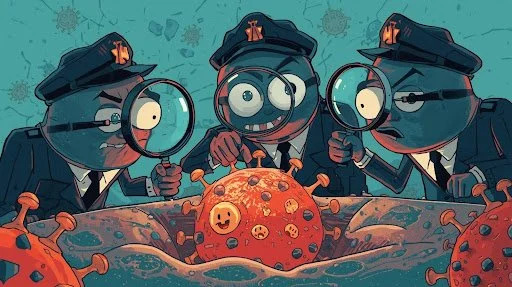
So what is immunotherapy exactly? As you may already know our immune system is like our body’s security team. It patrols the body at all times to look for anything that could cause harm like viruses, bacteria or abnormal cells. Generally, if a cell becomes cancerous, the immune system is able to recognize it and kill it.However, sometimes, a cancer cell is able to slip past this system. How does a cancer cell manage to escape? It does so by either disguising itself as a healthy cell, switching off our immune cells or sending “don’t attack me” signals. So even though cancer is present, our immune system isn’t able to react as strongly to it. This is where immunotherapy comes in. Instead of introducing any external weapons, it upgrades our body’s immune system itself. It either helps the immune cells recognize the hidden cancer or blocks the “don’t attack me” signals. In simple terms, it acts like a guide and strengthens our immune cells to be able to attack.
Now there are many ways a trainer guides you while you play a sport. Similarly, immunotherapy can be administered in many different ways to guide the immune system in fighting cancer effectively. Some of the most important approaches include immune checkpoint inhibitors, monoclonal antibodies, adoptive cell therapy, and oncolytic virus therapy.
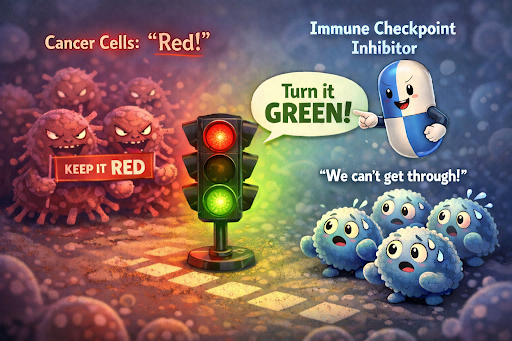
Let’s first discuss immune checkpoint inhibitors. Let me simplify that for you. On the road, traffic signals guide the movement of cars. In our immune system, there are “checkpoints” present, which guide the action of our immune cells. Imagine green meaning that immune cells can attack, while red means they must stop. When cancer cells are present, they hijack this traffic signal and keep it constantly “red” so they can escape without being caught. What immune checkpoint inhibitors do is they block these checkpoint proteins and turn the signal “green” again so the immune cells can attack.
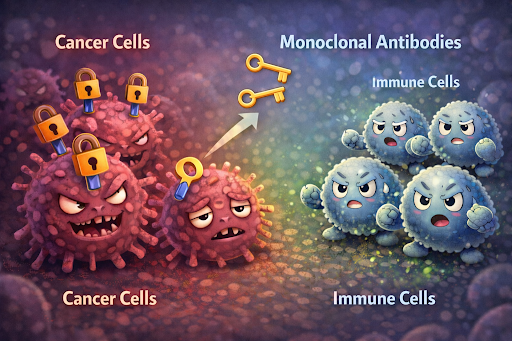
The next type of immunotherapy is using monoclonal antibodies. Cancer cells have markers on their surface. Think of them as locks. Monoclonal antibodies are lab-made proteins that are designed as keys that can fit into these locks. Once attached, they mark the cancer cells and block signals that help cancer grow so they can be destroyed by other immune cells.
We talked about exposing cancer cells and blocking “don’t attack me” signals. But what about strengthening the immune cells themselves? For this, we use something called adoptive cell therapy. It’s like our security team is undergoing extensive military training. Our immune cells are taken from the body, modified in the lab and injected back into the body. This modification helps them fight and detect cancer better. But what is modified exactly? That’s what we’ll find out in the next blog, where we will explore two important examples of adoptive cell therapy: CAR-T cell therapy and tumor-infiltrating lymphocyte (TIL) therapy.
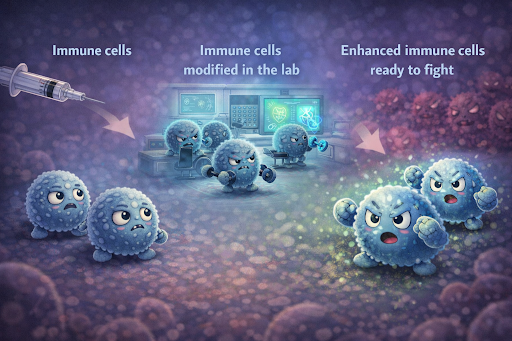
These are only a few of the many ways immunotherapy is being developed as a treatment for cancer. As we speak, scientists around the world are working on many other forms of immunotherapy.
An important question remains: Will immunotherapy become a more effective way to treat cancer than the other forms of treatment that are known to us? Unlike chemotherapy and radiation, immunotherapy specifically recognizes and attacks cancer cells, thereby reducing damage to normal cells. In some patients, it can also lead to long-lasting cancer control, particularly for certain cancer types such as melanoma, lung cancer and some blood cancers. Additionally, it is specially tailored to a patient's immune system so it creates personalized treatment plans. However, like every other therapy out there, it has its limitations too. Certain tumours respond poorly, it may not be effective in every patient, and immune-related side effects can occur. In certain cases, the response may take time, and the high cost and limited availability remain challenges. Despite these challenges, ongoing research continues to improve immunotherapy's effectiveness, accessibility and safety making it one of the most promising therapies for cancer.
