The Body’s Living Drug: Understanding CAR T-Cell Therapy
When you think about cancer treatments, standard options like chemotherapy, radiation, or surgery usually come to mind. These methods have been used for decades to attack cancer cells directly. But in recent years, a revolutionary new approach called immunotherapy has emerged. Instead of using external chemicals to fight cancer, immunotherapy upgrades our body's own immune system to do the heavy lifting.
One of the most exciting and cutting-edge types of immunotherapy is called CAR T-Cell therapy.
If standard treatments like chemotherapy are like throwing a blanket bomb at a tumor, CAR T-cell therapy is like creating a heat-seeking missile specially programmed to find one specific target. Let’s break down exactly how scientists pull this off.
Step 1: Meeting the T-Cells
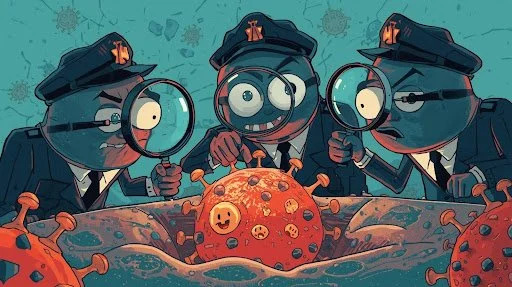
To understand this therapy, we first need to meet the star players of our immune system: T-cells.
Think of T-cells as the highly trained soldiers of our body's natural defense force. Their main job is to hunt down and destroy infected or abnormal cells. However, cancer cells are masters of disguise. They often hide their true identity or blend in with healthy tissue, leaving our T-cell soldiers completely blind to the threat.
Step 2: The Lab Upgrade (Adding the "Radar")
Because the T-cells cannot naturally see the cancer, scientists have figured out a way to give these soldiers a major technology upgrade.
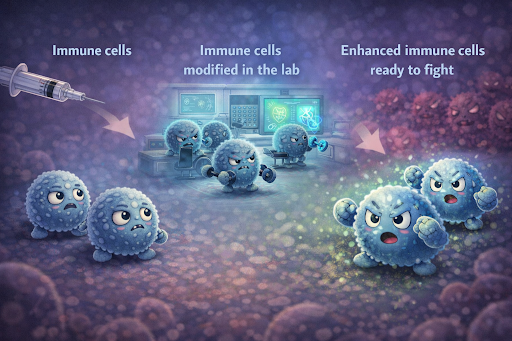
First, doctors collect a sample of T-cells from the patient’s own blood. These cells are sent to a specialized laboratory. Here, scientists use genetic engineering to insert a new genetic blueprint into the T-cells. This blueprint allows the T-cells to grow an entirely new feature on their surface called a Chimeric Antigen Receptor, or CAR for short.
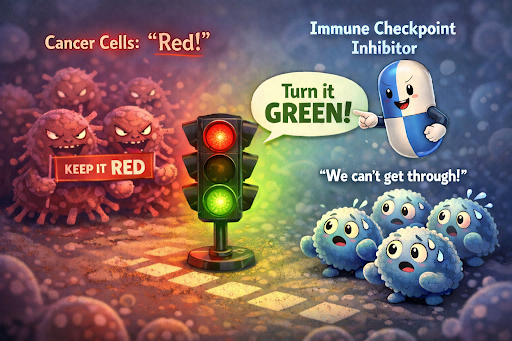
What exactly is a CAR? Think of it as a highly advanced radar system or a GPS tracker. This specific radar is custom-designed to scan the body and lock onto a very specific marker (called an antigen) found on the surface of that patient’s specific cancer cells.
Step 3: Growing an Army
Once the T-cells have their new CAR radar installed, they are officially CAR T-cells. But a few soldiers aren't enough to fight a massive illness.
While still in the lab, scientists duplicate these upgraded cells over and over again in a controlled environment until they have grown an army of millions.
Step 4: The Return of the Soldiers
Finally, this newly trained army is injected back into the patient's bloodstream. Armed with their new radar systems, these CAR T-cells can now see right through the cancer cells' disguises. They navigate straight to the tumor, lock onto it, and destroy it with incredible precision.
Because these are living cells, they can continue to multiply and patrol the body long after the initial injection. This is why scientists often refer to CAR T-cell therapy as a "living drug."
Promises and Limitations
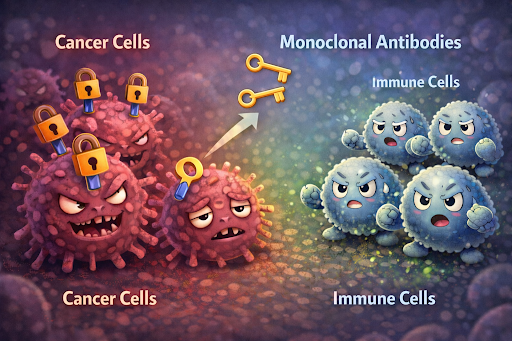
CAR T-cell therapy has shown absolutely jaw-dropping results, particularly for patients with certain blood cancers like leukemia and lymphoma. In many cases, it has brought about complete remission for patients who had already tried every other standard treatment.
However, like any powerful medical tool, it comes with unique risks and challenges:
The Cytokine Storm: When millions of CAR T-cells attack cancer all at once, they release a massive flood of chemicals into the bloodstream. This can cause a severe, high-fever reaction called Cytokine Release Syndrome (CRS), which requires careful monitoring in a hospital.
The Solid Tumor Barrier: While CAR T-cells are highly effective against "liquid" cancers (blood cancers), they have a harder time penetrating "solid" tumors, like breast, lung, or brain cancer. Overcoming this barrier is one of the biggest areas of medical research today.
Cost and Time: Because every single dose has to be custom-made from the patient's own living cells, the process takes a few weeks and is currently incredibly expensive.
Summary
CAR T-cell therapy represents a massive leap forward in modern medicine. It proves that sometimes, the most powerful tool to fight cancer isn't a chemical synthesized in a factory, but a supercharged, highly focused version of our own natural biology.
