Sniper-Precision Medicine: Understanding Targeted Therapy
When we think about fighting cancer, the mind usually goes straight to chemotherapy. Chemotherapy has saved countless lives, but it works a bit like a broad-spectrum blast: it travels through the entire body and attacks any cell that multiplies quickly. While this kills cancer cells, it also accidentally damages healthy cells that grow fast, like our hair and stomach lining, leading to tough side effects.
But what if we could design a treatment that ignores healthy cells entirely and only attacks the specific "glitches" that make a cancer cell dangerous?
That is exactly what targeted therapy does. If chemotherapy is a blanket bomb, targeted therapy is a high-tech sniper rifle. It marks a massive shift toward personalized, smart medicine.
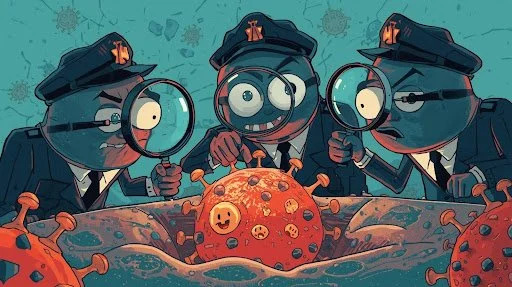
The Analogy: Cutting the Factory Phone Lines
To understand how targeted therapy works, imagine a cancer cell is a rogue factory inside your body. This factory is constantly receiving "orders" over its phone lines telling it to grow, divide, and expand out of control.
Traditional chemotherapy tries to shut the factory down by destroying the whole building.
Targeted therapy takes a different approach. It acts like a specialized technician that slips in and cuts the specific phone line delivering the growth orders. Without those constant signals, the rogue factory can no longer function, and the cancer cells naturally stall out and die.
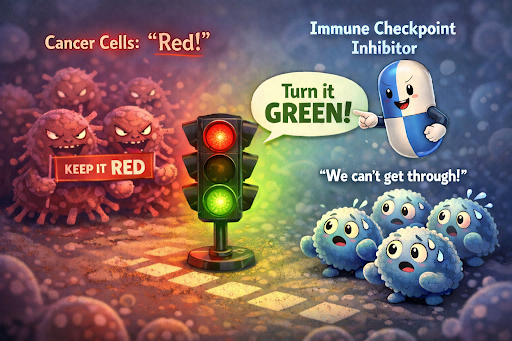
How Does It Know What to Target?
Every tumor has its own unique genetic makeup. Before a patient can start targeted therapy, doctors must take a small sample of the tumor (a biopsy) and run it through a lab test called genomic profiling.
Scientists look at the DNA of the cancer cells to find the exact mutations or faulty proteins—the specific "glitches"—that are driving the cancer's growth. Once they identify the glitch, they match the patient with a drug specifically engineered to block it.
The Two Main Types of Upgrades
Scientists generally design targeted therapies in two different sizes, depending on where the glitch is located:
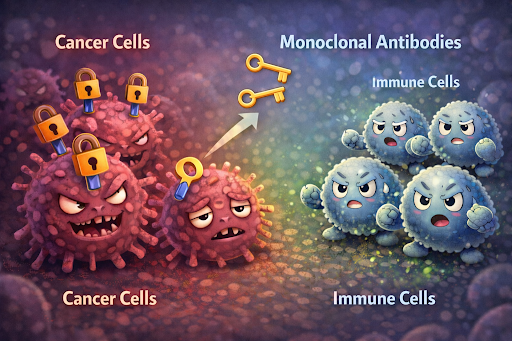
Small-Molecule Drugs (The Inside Agents): These drugs are tiny enough to easily slip right through the cancer cell’s outer wall. Once inside, they find the faulty internal "on/off switch" that is stuck on "grow" and manually flip it to "off."
Monoclonal Antibodies (The Outside Blockers): These are larger, lab-made proteins that are too big to get inside the cell. Instead, they attach themselves to the outside surface of the cell. They act like a plastic cap placed over a socket, blocking growth signals from plugging into the cell in the first place.
(Fun fact: Monoclonal antibodies are so versatile they are also used in immunotherapy! In immunotherapy, they act as flags to tell the immune system to attack. In targeted therapy, they act as shields to block growth signals.)
The Hidden Challenges
While targeted therapy is an incredible advancement that usually causes much milder side effects than chemotherapy, it isn't without its hurdles:
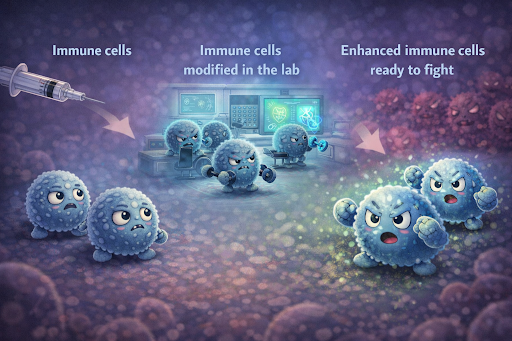
Cancer Can Adapt: Cancer cells are notoriously smart. Over time, a tumor might learn to mutate again, finding a "detour" or a new phone line to bypass the blocked signal. This is called drug resistance, and scientists are constantly developing "second-generation" drugs to stay one step ahead.
It’s Highly Specific: Because these drugs are so precise, a targeted therapy that works miracles for one person might do absolutely nothing for another person, even if they have the exact same type of cancer. It completely depends on whether their tumors share the same genetic glitch.
Summary
Targeted therapy represents the future of cancer care—moving away from a "one-size-fits-all" approach and moving toward treatments tailored specifically to the blueprint of the disease. By learning the language of cancer cells, scientists have found a way to turn their own growth signals against them.
